When the Music Becomes the Game
Melissa Alonso and Wes McRae | November 2026 – Atlanta, GA
A ping sounds from somewhere behind you. Turn toward it, and you might find the clue you need. Turn the wrong way, and the hidden object stays hidden.
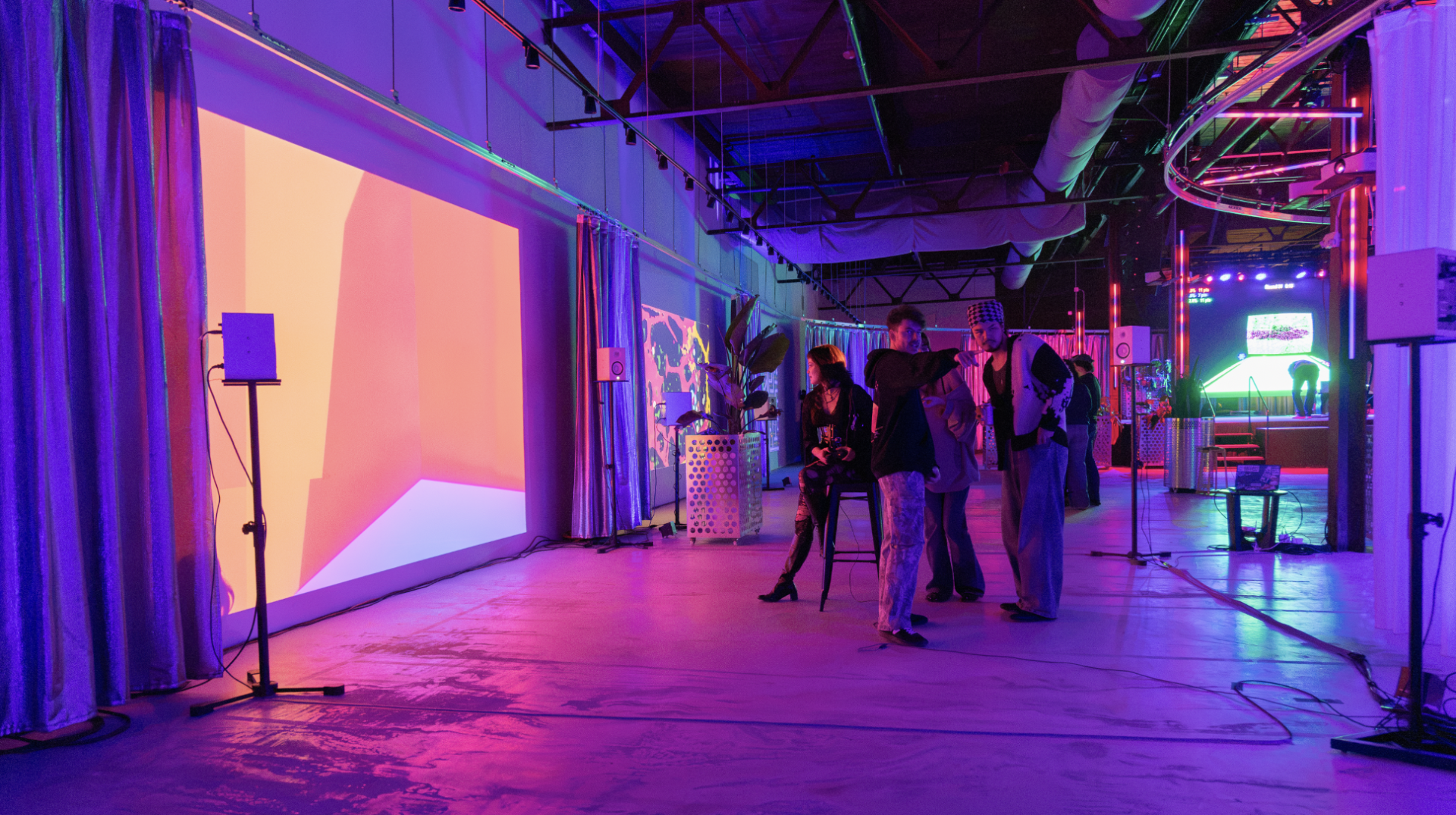
That’s the idea behind one of the games created for Georgia Tech’s Neo-Arcade: a hide-and-seek challenge where sound helps players find their way. Players move through a portal into one of five rooms to search for an object. Each room has its own original music, and a sonar-like ping points toward the object’s location. The three-person team—Anthony Cammarota, Gibran Mobarak and James Harris—built the game’s audio to work in space. Four speakers surround the player, so a sound can seem to come from in front, behind or beside them. The team began with a visual idea inspired by artists Mark Rothko and James Turrell, then worked out how to make sound an essential part of play.
Cammarota is a Ph.D. candidate in Music Technology and a graduate research assistant in the Creative Music Technology Lab. Mobarak is a Master of Science student in Music Technology and president of Georgia Tech’s student chapter of the Audio Engineering Society. Harris is a master’s student in Music Technology.
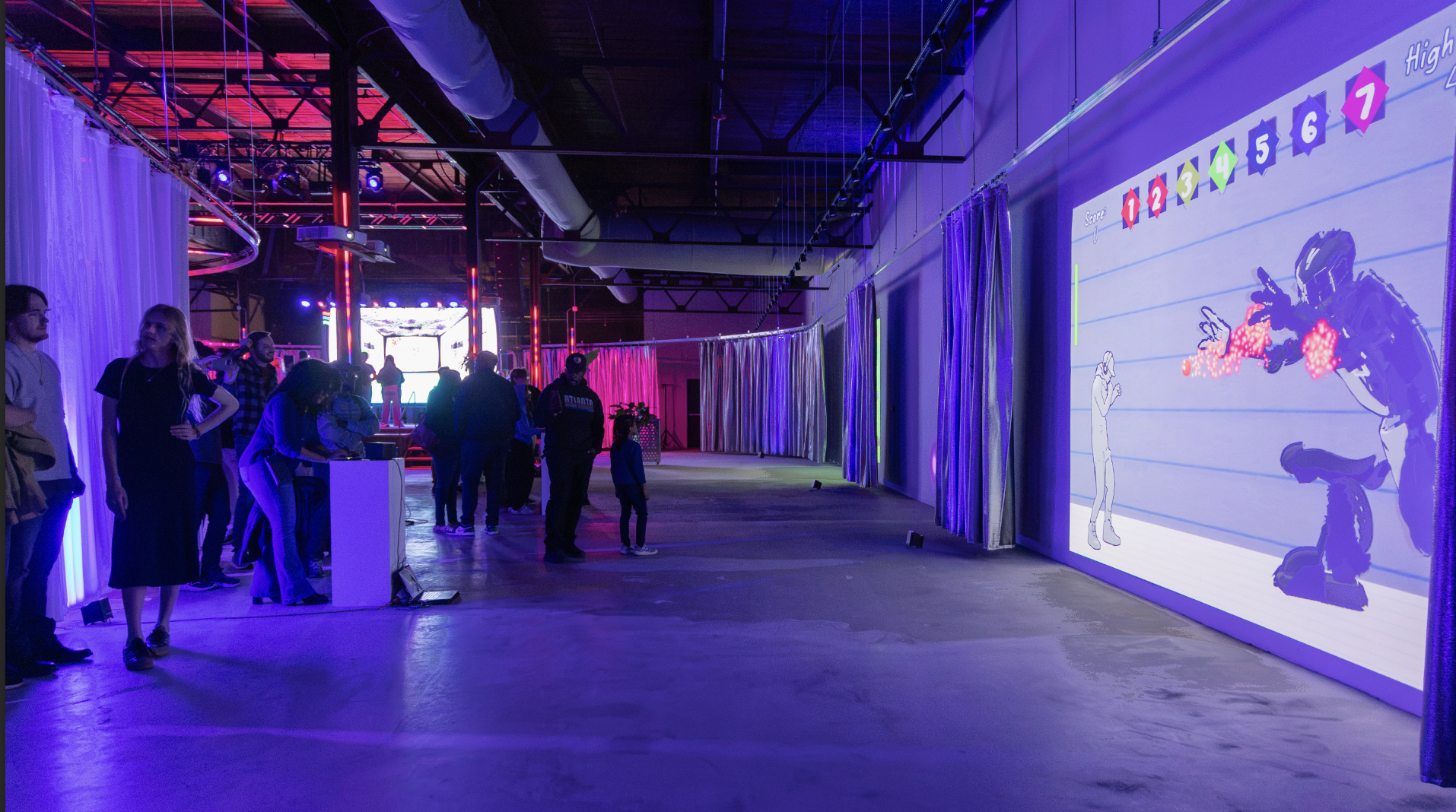
At the November 11 Neo-Arcade at LOOP, visitors stayed with the game longer than the team expected. The visuals and music drew people in; the sound design asked them to listen closely. It was a satisfying payoff for a project developed in about a month—and a demonstration of the course’s central idea: music can do more than accompany a game. It can help make the game work.
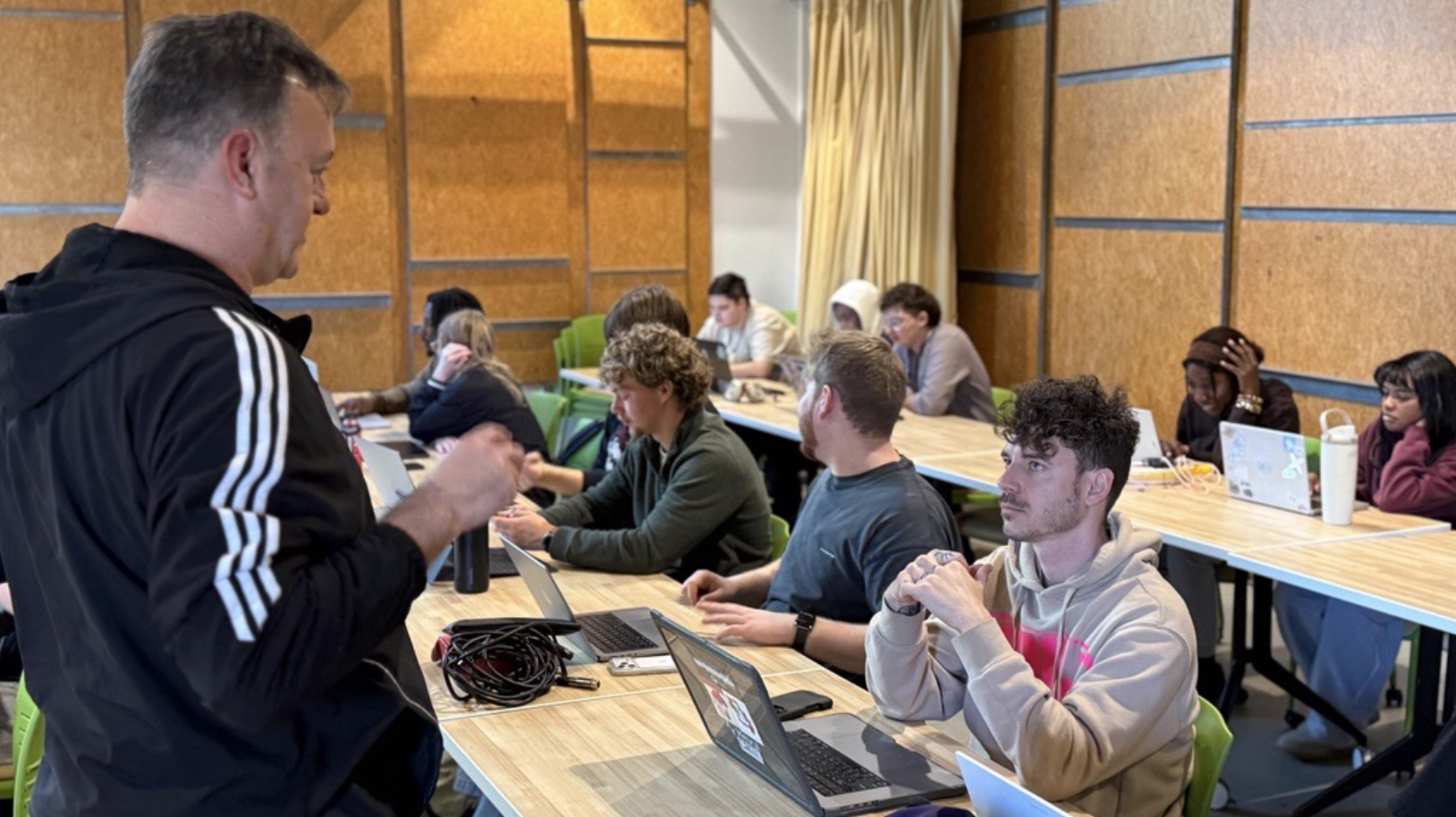
Dr. Jeremy Muller, who teaches Integrating Music into Multimedia in Georgia Tech’s School of Music, asks students to explore games as an art form. “We’re specifically not making soundtracks for games,” he said. “We’re trying to make music-centered works that coincidentally make music.”
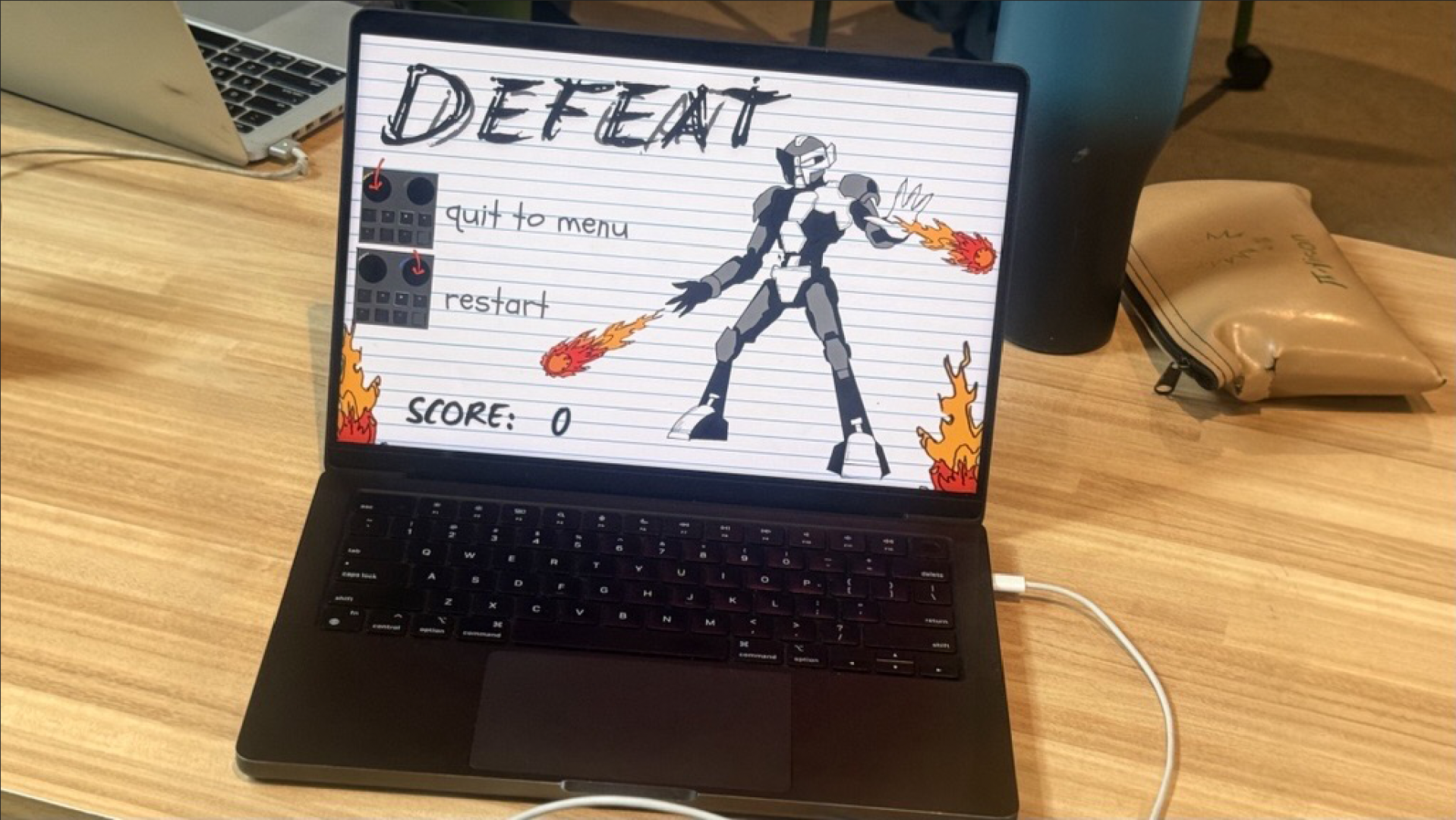
That idea also shapes Fugue Zuno, a musical fighting game by Sam Kuran, Bella Gurski and Austin Barrett. Its ear-training mechanic asks players to recognize notes as steps in a minor scale, then play a melody back. Different sounds signal whether the answer is right or wrong.
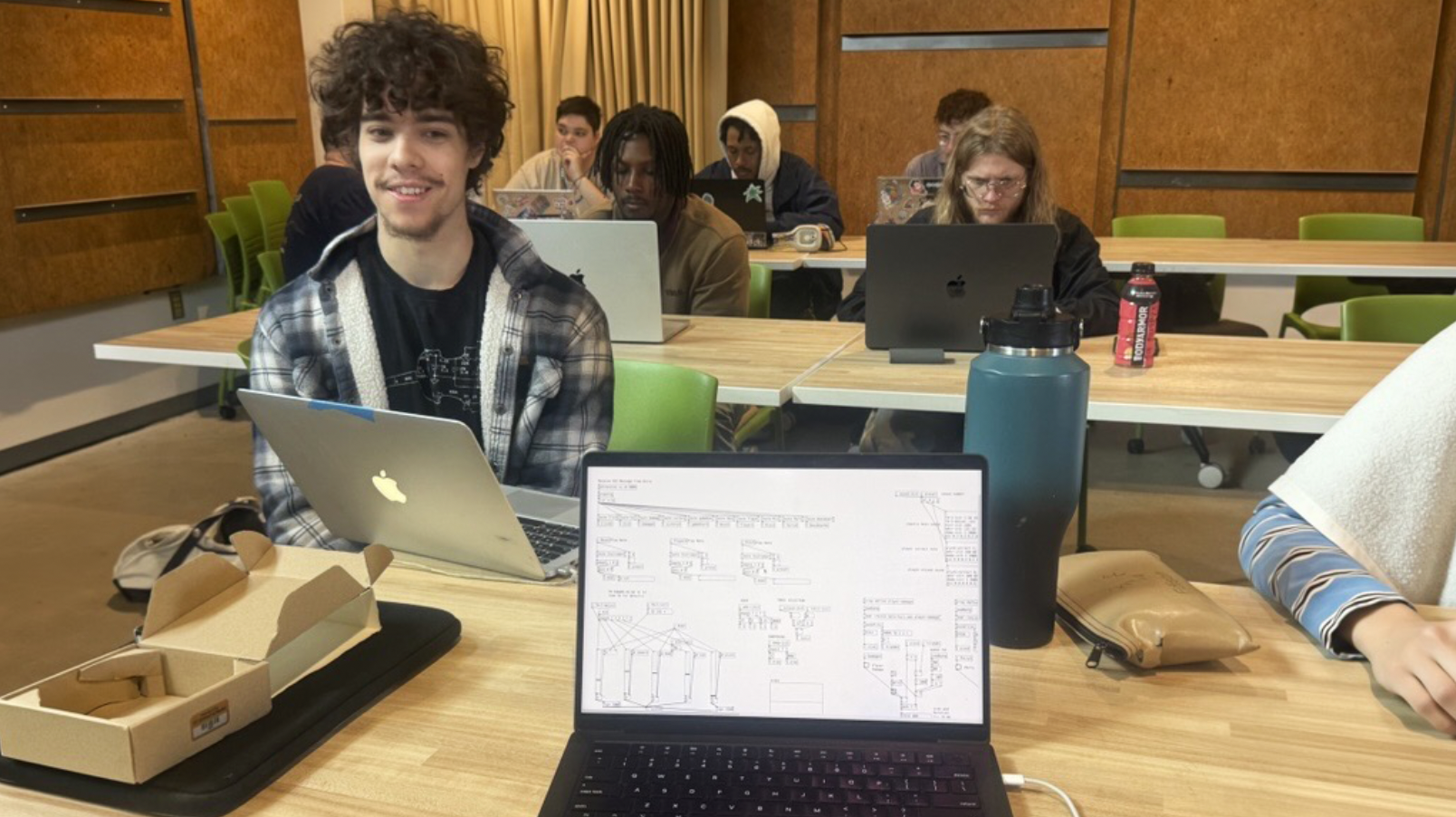
The team brought different strengths to the project. Kuran, a fourth-year student, helped shape the game’s concept and flow. Gurski, a third-year student and transfer, worked on the backend. Barrett, a fourth-year Music Technology student, created the visuals and animations and contributed sound. During development, they had to decide which ideas could make it into the game on a tight timeline.
“You want it to be infinite,” one student said of the creative process. “And then you have to figure out a way to make it finite.”
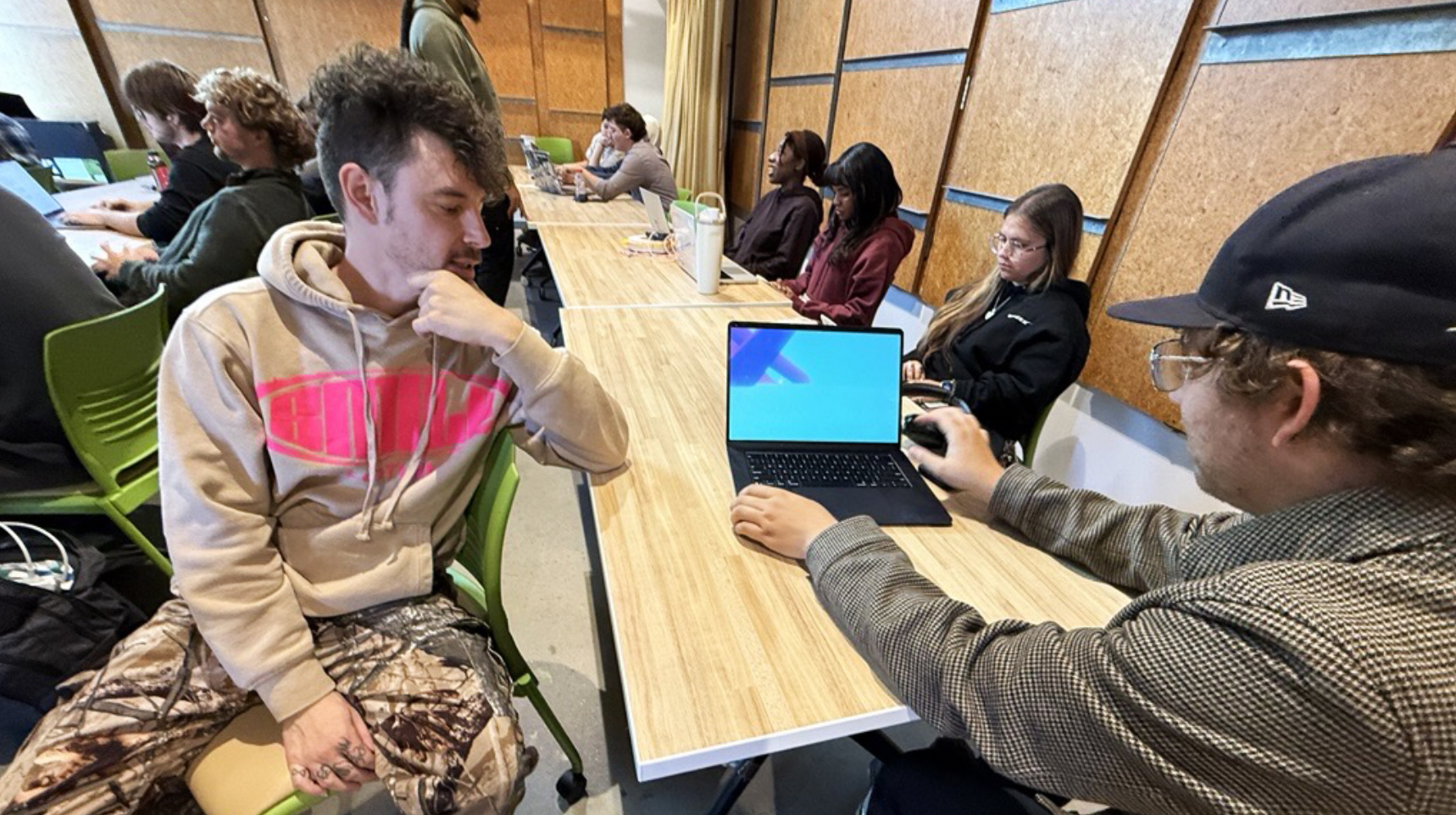
That balancing act is part of what makes the public showcase useful. Students don’t just turn in a project for a grade; they put it in front of people who haven’t seen it before. At Neo-Arcade, players may find a game intuitive, confusing, challenging or more fun than its creators anticipated. The response gives students a chance to see what works outside the classroom.
The course makes room for many kinds of experiments. At the event, Ph.D. student TeAiris Majors presented a virtual-reality app for practicing ballet percussion. Majors described the class as a chance to “bring together our artistic practice in music and our programming skills and love for games.”
Whether it was creating a new game from a single idea or taking inspiration from an existing concept, students delivered functional and fun in just a few weeks. Third-Year Music Technology student Jenn Bennett showed Flappy Bird DS, a version of the familiar game controlled with the Nintendo DS microphone.
The course draws on several disciplines, including “animation, visual design, storytelling” and technologies that have to communicate with one another, Muller said. That range lets students approach a game as both a technical system and an artistic experience—one where sound, visuals and interaction work together.
For students, the deadline and the audience help make the work tangible. One student said the chance to show a finished project to other people was part of what motivated them to take the class. The result is an arcade where the most important control might be a microphone, a melody—or simply knowing which direction to turn when you hear a ping.
Media Inquiries
Director of
Communications
College of Design
E-mail Ann
Assistant Director of Communications
College of Design
E-mail Melissa